Shooting Range Safety Rules: A Complete and Detailed Guide
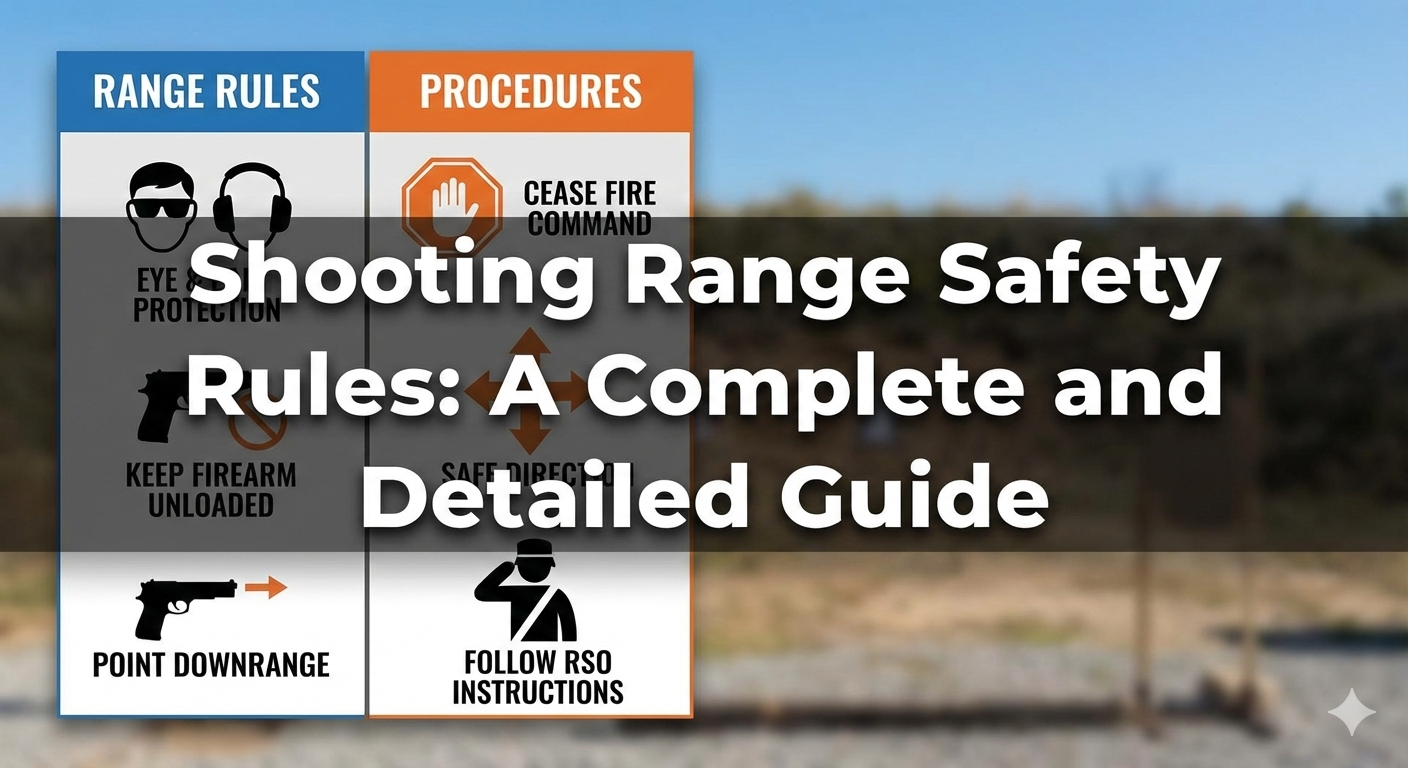
Shooting ranges are designed to provide a controlled and secure environment where firearms can be used responsibly. However, no amount of physical safety infrastructure can replace proper human behavior. Safety at a shooting range depends entirely on every individual understanding and strictly following established rules. Whether you are a beginner handling a firearm for the first time or an experienced shooter practicing regularly, shooting range safety rules apply equally to everyone.
This in-depth guide explains shooting range safety rules in detail, focusing on the reasoning behind each rule and how it applies in real situations. By understanding not just what the rules are, but why they exist, shooters can build habits that ensure safety both at the range and beyond.
Table of Contents
- The Importance of Shooting Range Safety
- Treat Every Firearm as if It Is Loaded
- Always Keep the Muzzle Pointed in a Safe Direction
- Keep Your Finger Off the Trigger Until You Are Ready to Fire
- Be Certain of Your Target and What Is Beyond It
- Eye and Ear Protection Requirements
- Understanding Range Commands
- Safe Firearm Handling on the Firing Line
- Ammunition Safety at the Range
- Proper Target Use and Placement
- Behavior and Awareness on the Range
- The Role of the Range Safety Officer
- Alcohol, Drugs, and Fatigue Considerations
- Conclusion
The Importance of Shooting Range Safety
Firearms are precision tools capable of causing serious injury or death if mishandled. Shooting ranges exist to minimize risk by providing controlled firing directions, protective backstops, and supervision. Despite these measures, accidents can still occur when individuals ignore safety procedures or become complacent.
Shooting range safety rules are designed to eliminate uncertainty. They ensure that everyone on the range knows where firearms should be pointed, when they may be handled, and how they must be stored when not in use. These rules protect shooters, range staff, and anyone nearby. More importantly, they promote responsible firearm culture by reinforcing discipline and awareness.
Treat Every Firearm as if It Is Loaded
One of the most fundamental principles of firearm safety is to always assume that every gun is loaded. Even if you personally unloaded the firearm or watched someone else clear it, you should still handle it with the same caution you would use for a loaded weapon.
This rule exists because many firearm accidents happen due to assumptions. A shooter may believe a gun is unloaded and point it in an unsafe direction or pull the trigger casually. By treating every firearm as loaded, shooters maintain constant awareness of muzzle direction and trigger discipline, significantly reducing the risk of accidental discharge.
At the shooting range, this principle ensures that firearms are always handled deliberately and with respect, regardless of the situation.
Always Keep the Muzzle Pointed in a Safe Direction
Muzzle discipline is one of the most visible indicators of safe firearm handling. The muzzle of a firearm should never point at anything you do not intend to shoot. At a shooting range, the only safe direction is downrange toward the designated backstop.
This rule applies at all times, including when loading, unloading, adjusting sights, or dealing with malfunctions. Even a momentary lapse in muzzle control can put others at risk. By consistently keeping the muzzle pointed downrange, any unintended discharge will be safely absorbed by the range’s protective systems.
Keep Your Finger Off the Trigger Until You Are Ready to Fire
Trigger discipline is essential for preventing negligent discharges. Your finger should rest outside the trigger guard, typically along the frame or receiver, until your sights are aligned on the target and you have made a conscious decision to fire.
At the range, unexpected events such as loud noises, movement from nearby shooters, or minor slips can cause involuntary reactions. If your finger is already on the trigger, these reactions can result in an unintended shot. Proper trigger discipline ensures that firing only occurs intentionally and under control.
Be Certain of Your Target and What Is Beyond It
Even in a controlled range environment, shooters must remain aware of where their bullets will travel. Targets should always be placed correctly so that rounds strike the backstop safely. Shooting at improper angles, damaged targets, or unauthorized objects can result in ricochets or rounds escaping the intended impact area.
This rule reinforces accountability. Every shot fired is the responsibility of the shooter, and understanding the full path of the bullet is a critical part of safe firearm use.
Eye and Ear Protection Requirements
Eye and ear protection are mandatory at all shooting ranges for good reason. Firearms produce debris such as hot brass, unburned powder, and fragments from bullet impact. These materials can cause serious eye injuries if proper protection is not worn.
Hearing protection is equally important. The sound generated by gunfire can permanently damage hearing in a very short time. Repeated exposure without adequate protection can lead to long-term hearing loss or tinnitus. Wearing proper eye and ear protection at all times on or near the firing line is not optional; it is a core safety requirement.
Understanding Range Commands
Range commands exist to coordinate safe behavior among multiple shooters. These commands are usually issued by a Range Safety Officer or designated range supervisor. When a command is given, it must be followed immediately and without hesitation.
A command such as “cease fire” requires all shooters to stop firing instantly, remove their fingers from the trigger, and await further instructions. Commands indicating whether the range is “hot” or “cold” determine when firearms may be handled. Ignoring or misunderstanding these commands can place everyone on the range at risk.
Safe Firearm Handling on the Firing Line
Firearms should only be loaded and fired when the shooter is positioned at the firing line and the range has been declared safe for shooting. When not actively firing, actions should remain open and chambers visibly clear. This allows others, including range officers, to quickly verify that firearms are safe.
Before leaving the firing line, shooters must unload their firearms completely and confirm that the chamber is empty. This process should be done carefully and consistently to prevent mistakes.
Ammunition Safety at the Range
Using the correct ammunition is critical for both firearm function and range safety. Many ranges restrict certain types of ammunition because they can damage backstops or increase the risk of fire and ricochet. Shooters should always verify that their ammunition complies with range rules.
Inspecting ammunition before use is also essential. Damaged or corroded rounds can cause malfunctions or catastrophic firearm failures. Safe ammunition handling is an often-overlooked aspect of range safety, but it plays a vital role in preventing accidents.
Proper Target Use and Placement
Targets must be placed in a way that ensures all bullets impact the backstop. Improper placement can cause rounds to strike the floor, ceiling, or side structures, creating dangerous conditions. Only approved targets should be used, and shooters should never fire at unauthorized objects or range equipment.
This rule exists to control the bullet’s trajectory and eliminate unpredictable impacts.
Behavior and Awareness on the Range
Safe behavior at the range goes beyond firearm handling. Shooters must remain alert, focused, and respectful of others. Horseplay, distractions, or careless movement can lead to serious accidents.
When the range is declared cold, shooters must not touch firearms for any reason. This ensures that individuals downrange can safely change targets without risk. Maintaining awareness of range status and surroundings is a shared responsibility.
The Role of the Range Safety Officer
Range Safety Officers are present to enforce rules and ensure safe operation. Their authority exists to protect everyone on the range. Shooters should listen carefully to instructions, ask questions if uncertain, and accept corrections without argument.
The presence of a range officer adds an additional layer of safety, but their effectiveness depends on cooperation from shooters.
Alcohol, Drugs, and Fatigue Considerations
Firearms require full attention and clear judgment. Alcohol, drugs, or extreme fatigue significantly impair reaction time and decision-making. For this reason, ranges strictly prohibit shooting under the influence or when mentally or physically compromised.
Choosing not to shoot when unfit is a responsible decision and an important safety practice.
Conclusion
Shooting range safety rules are not obstacles to enjoyment; they are the foundation that makes safe shooting possible. When every shooter follows these principles, the range becomes a controlled, predictable, and secure environment.
By understanding the reasoning behind each rule and applying them consistently, shooters protect themselves and others while building responsible firearm habits that extend beyond the range. Safety is not a one-time lesson it is a continuous commitment every time a firearm is handled.