Best Scope Magnification for 300 Yards
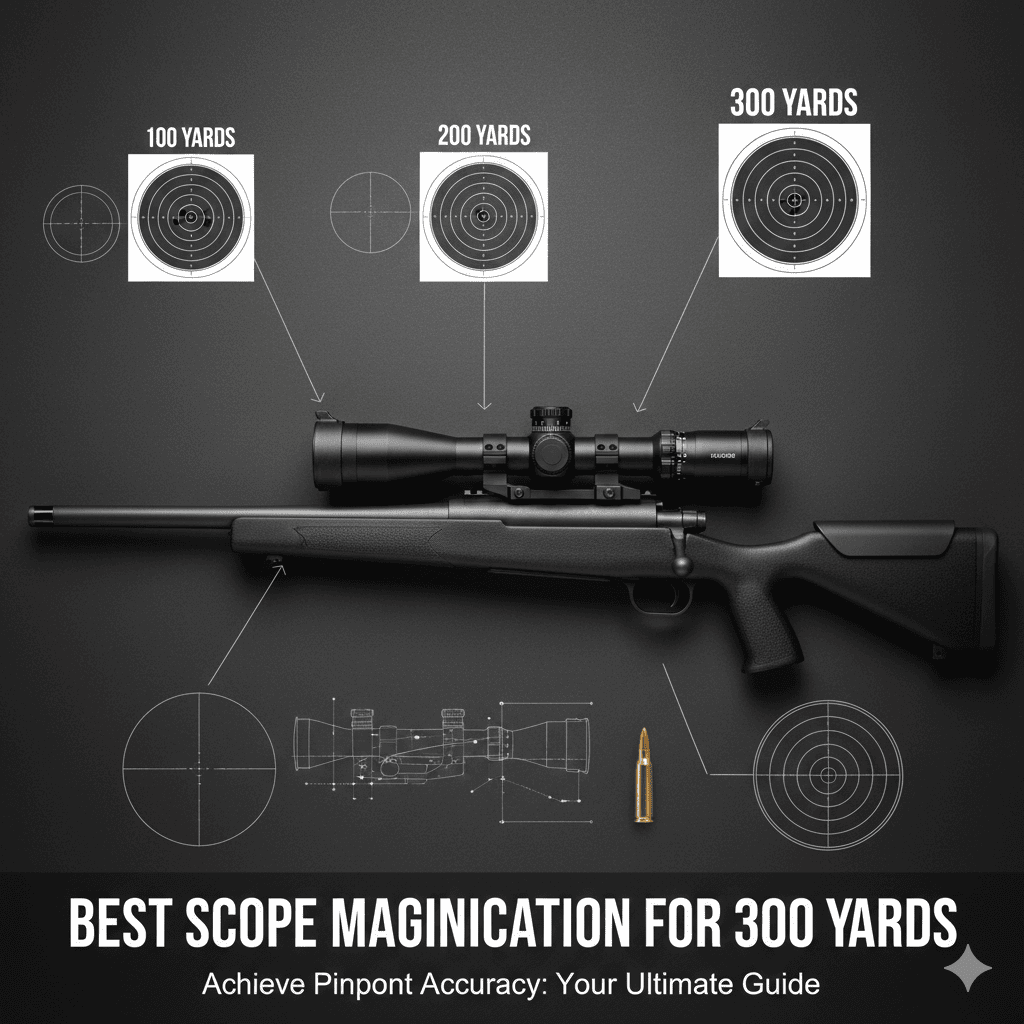
Selecting the best scope magnification for shooting at 300 yards is a decision that directly affects accuracy, comfort, and overall shooting performance. This distance represents a practical midpoint between short-range and long-range shooting, meaning the optic you choose must provide enough magnification for precise aiming while still maintaining a stable sight picture and a usable field of view. Many shooters assume that higher magnification always produces better accuracy, but real-world experience shows that balance is far more important than extreme zoom power.
At 300 yards, the target is distant enough that unaided vision or very low magnification makes precision difficult, yet it is still close enough that excessively high magnification can introduce problems such as visible reticle shake, reduced brightness, and slow target acquisition. Because of this, understanding how magnification interacts with clarity, stability, and shooting purpose is essential before choosing a scope.
Table of Contents
Understanding the Importance of the 300-Yard Distance
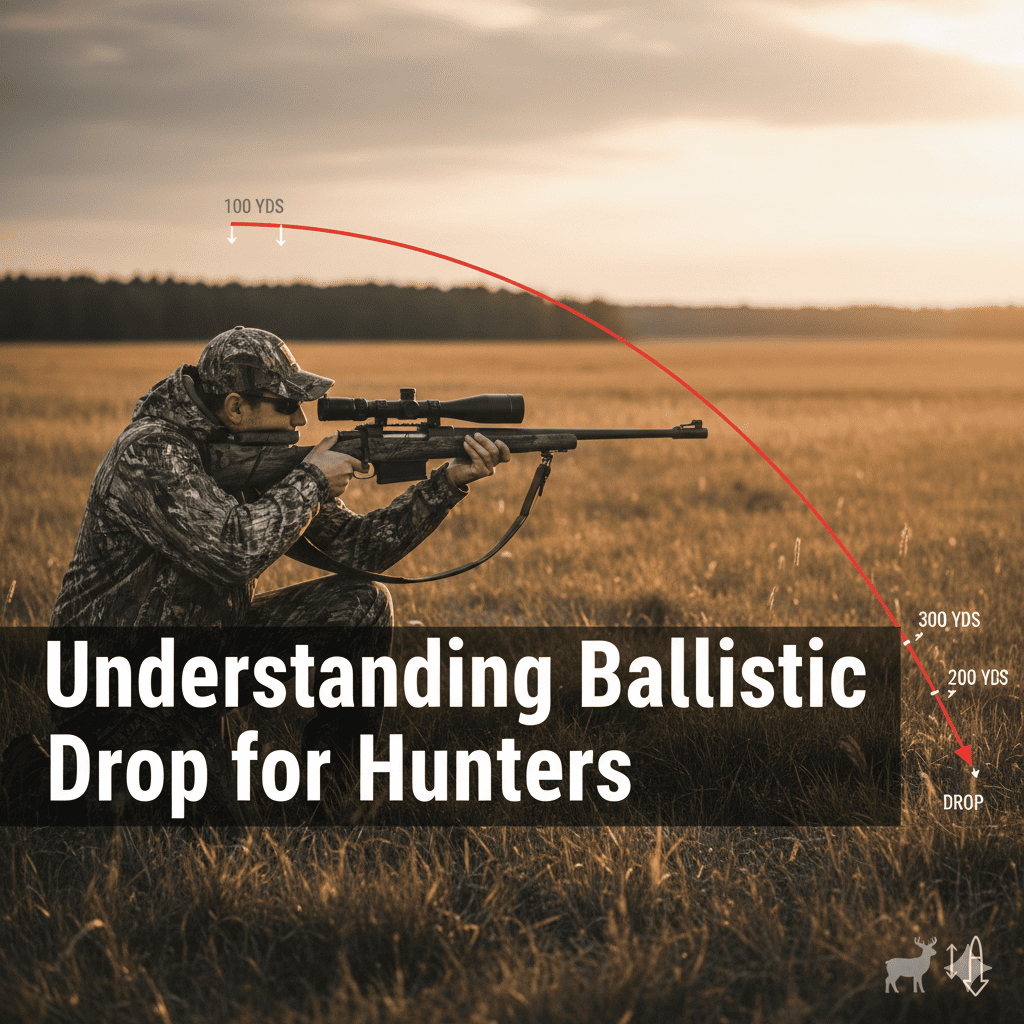
Three hundred yards is a highly practical distance in real shooting scenarios. Many hunting shots occur within this range, rifle zeroing procedures are frequently confirmed around it, and range shooters commonly practice grouping at this distance to evaluate ammunition and rifle consistency. Environmental influences such as wind drift and bullet drop begin to matter noticeably here, so clear sight alignment and confident reticle placement become increasingly important. A properly selected magnification level helps the shooter read the target, hold steady, and execute a clean shot without unnecessary visual strain.
Ideal Magnification Range for 300-Yard Shooting
For most shooters and most applications, the ideal magnification range for 300-yard shooting falls roughly between six-power and twelve-power. Within this window, the shooter gains sufficient visual detail to place shots precisely while avoiding the instability and narrow viewing angle associated with very high magnification. Many experienced hunters and marksmen naturally settle around eight-power to ten-power at this distance because it offers a comfortable compromise between clarity and control.
Lower magnification levels can still be effective in certain situations. When shooting at large game animals, full-size steel plates, or other clearly visible targets, magnification in the three-to-five-power range may provide enough detail for ethical and accurate shooting. However, as target size decreases or precision requirements increase, limited magnification begins to restrict the shooter’s ability to refine aim.
Mid-range magnification—roughly six-power through nine-power—delivers the most balanced performance. Image clarity remains strong, the field of view is still practical, and reticle movement caused by natural body sway is not overly exaggerated. Because of this versatility, mid-range magnification is widely considered the most useful and forgiving choice for general 300-yard shooting.
Higher magnification between ten-power and twelve-power becomes helpful when the shooting task demands fine precision, such as paper-target grouping or benchrest stability. Beyond this level, the image often darkens, wobble appears exaggerated, and the field of view narrows, producing diminishing returns.
Fixed vs. Variable Power Scopes
Fixed-power optics, especially classic ten-power scopes, are valued for simplicity, durability, and often better optical clarity at the same price point. With fewer moving parts, they tend to provide consistent eye relief and long-term reliability. For shooters who frequently engage targets near 300 yards, a fixed ten-power scope can be an excellent dedicated solution.
Variable-power scopes offer flexibility across distances. Common ranges such as two-to-ten, three-to-nine, or four-to-twelve power allow shooters to dial down for closer shots and increase magnification for precision. This adaptability makes them especially useful for hunters and general-purpose rifle owners who encounter changing terrain and unpredictable shot opportunities.
1. Vortex Crossfire II 3‑9×40 Rifle Scope
This classic 3-9×40 scope is one of the most widely recommended all-around optics for 300-yard shooting. The range of magnification lets you clearly see targets without over-zooming, and the Dead-Hold BDC reticle helps with bullet drop compensation at mid-range.
Pros:
- Excellent value and overall durability.
- Good field of view and eye relief for faster target acquisition.
- Reliable reticle for medium range holds.
Cons:
- Slight chromatic aberration at higher power.
- Turrets may feel softer compared with premium optics.
2. Leupold VX‑Freedom 3‑9×40 Rifle Scope
A trusted choice from one of the most established optics brands, this 3-9×40 offers clear glass, durable construction, and low-light performance — all important for accurate shooting at 300 yards and beyond.
Pros:
- Crisp optics with near-edge clarity.
- Very lightweight and rugged.
- Lifetime warranty from Leupold.
Cons:
- Reticle is not illuminated.
- Basic reticle design not optimized for tactical holds.
3. UUQ 2.5‑10×40 Rifle Scope
This versatile 2.5-10×40 scope delivers flexibility from low magnification up to ten power, making it a good mid-range choice for shooting at 300 yards. It includes a red/green illuminated Mil-Dot reticle and is built to withstand moisture and shock.
Pros:
- Illuminated reticle for dawn/dusk conditions.
- Durable waterproof and fog-proof design.
- Good value with included mounts.
Cons:
- Illumination brightness levels are basic.
- Not as crisp as premium glass brands.
4. Vortex Diamondback Tactical 4‑16×44 Rifle Scope
4.3•Attraction•Open
For shooters who want a larger magnification range, the 4-16×44 gives the option to dial into fine detail at 300 yards while maintaining a comfortable field of view. It’s a good all-purpose optic for both hunting and target work.
Pros:
- Higher magnification helps with precision at distance.
- Strong optical clarity for the price bracket.
- Tactical turrets with solid feedback.
Cons:
- Slightly heavier than lower-power scopes.
- Overkill for close targets if not adjusted down.
5. Arken Optics SH4 GEN2 4‑16×50 Rifle Scope
This illuminated rifle scope offers a wide magnification range and a larger 50 mm objective lens to improve brightness — useful when shooting into late afternoon or shaded target areas. It’s often recommended as a value upgrade for shooters needing extra zoom and fine reticle detail.
Pros:
- Illuminated reticle with zero stop option.
- Strong light transmission from 50 mm objective.
- Solid turret feel and first-focal-plane reticle option.
Cons:
- Larger size adds weight.
- May require careful mounting to balance the rifle.
Optical Features That Matter Beyond Magnification
Magnification alone does not determine shooting success. Glass quality strongly influences clarity, brightness, and contrast. A high-quality mid-power scope often performs far better than a poorly made high-magnification optic.
Objective lens size also plays a role. Lenses in the forty-to-fifty-millimeter range provide an effective balance of brightness, weight, and mounting comfort, making them ideal for 300-yard use.
Reticle design affects aiming precision and speed. Duplex reticles favor hunting simplicity, BDC reticles assist with distance holdover, and MIL or MOA reticles support precise measurement and adjustment. Parallax adjustment further enhances accuracy by ensuring the reticle and target remain aligned when eye position shifts, which becomes increasingly important beyond 100 yards.
Choosing Magnification Based on Shooting Purpose
Hunters generally benefit from scopes in the three-to-nine or four-to-twelve range, commonly using six-to-eight power for real hunting shots at 300 yards. Target shooters often prefer eight-to-twelve power for clearer bullseye definition and tighter grouping. Tactical and precision shooters may own higher-power optics but frequently dial back to around ten power at 300 yards to maintain stability and awareness.
Common Mistakes When Selecting Scope Magnification
One of the most frequent misconceptions is believing that maximum magnification guarantees maximum accuracy. In reality, excessive magnification magnifies movement, reduces brightness, and slows target acquisition. Another mistake is prioritizing high zoom numbers over optical quality and durability. Reliable construction and clear glass consistently provide better real-world performance than extreme magnification alone.
Final Verdict
The most effective magnification for 300 yards is not a single number but a balanced working range. For the majority of shooters, six-to-twelve power offers the ideal combination of clarity, stability, and control, with eight-to-ten power standing out as the most universally practical setting. Classic three-to-nine and four-to-twelve scopes, along with dependable fixed ten-power optics, continue to prove their value because they match real shooting needs rather than chasing unnecessary extremes.
Choosing magnification within this balanced range ensures clear target visibility, steady aiming, and confident shot placement exactly what shooters need for consistent accuracy at 300 yards.