Pistol Parts Explained: A Detailed Guide
A pistol may look simple from the outside, but it is a carefully engineered machine made up of many interdependent parts. Each component plays a specific role in ensuring the firearm works safely, reliably, and accurately. Understanding pistol parts is important not only for shooters and gun owners, but also for anyone who wants to learn how modern firearms function at a mechanical level.
This guide explains pistol parts in detailed paragraph form, avoiding bullet points, so you get a smooth, complete understanding of how everything works together.
Table of Contents
- Understanding the Basic Structure of a Pistol
- The Frame: The Foundation of the Pistol
- The Slide: Controlling the Firing Cycle
- The Barrel: Directing the Bullet
- The Recoil System: Managing Energy
- The Magazine: Feeding Ammunition
- The Fire Control Group: Making the Pistol Fire
- The Firing Pin or Striker: Igniting the Cartridge
- Safety Mechanisms in Pistols
- Sights and Aiming Components
- Extraction and Ejection
- How All Pistol Parts Work Together
- Final Thoughts
Understanding the Basic Structure of a Pistol
A pistol is a type of handgun designed to fire one round per trigger pull, typically using a semi-automatic firing system. When a round is fired, energy from the shot cycles the internal mechanisms to load the next cartridge automatically. Although different brands and models may vary in appearance and internal layout, most modern pistols follow the same mechanical principles and share the same core parts.
At its most basic level, a pistol consists of a frame, slide, barrel, magazine, recoil system, and fire control components. These elements combine to manage ammunition feeding, firing, extraction, and reset for the next shot.
The Frame: The Foundation of the Pistol
The frame is the main body of the pistol and serves as its structural foundation. Every other major component either attaches to or interfaces with the frame. Frames are commonly made from polymer, aluminum alloy, or steel. Polymer frames are lightweight and resistant to corrosion, aluminum frames offer a balance between weight and strength, and steel frames provide durability and reduced felt recoil at the cost of added weight.
The grip is part of the frame and is the portion the shooter holds. Its shape, angle, and texture play a major role in comfort, recoil control, and shooting accuracy. Modern grips often include texturing or stippling to prevent slipping, especially when hands are sweaty or wet.
The trigger guard is another essential part of the frame. It surrounds the trigger and protects it from accidental contact. On many pistols, the front of the trigger guard is shaped to support a two-handed grip. Inside the frame are rails that guide the slide as it moves back and forth during firing. These rails must be precisely machined to ensure smooth operation and reliability.
The magazine well is the hollow section inside the grip that accepts the magazine. Its design affects how easily magazines can be inserted during reloads. Competitive and defensive pistols often have slightly flared magwells to speed up this process.
The Slide: Controlling the Firing Cycle
The slide is the upper portion of the pistol and is responsible for most of the movement during operation. It houses critical components such as the firing pin or striker, extractor, and sights. The slide moves rearward when a shot is fired and then forward again under spring pressure.
When the slide moves backward, it performs several tasks simultaneously. It extracts the spent cartridge case from the chamber, ejects it out of the ejection port, cocks the firing mechanism, and compresses the recoil spring. As it moves forward again, it strips a new cartridge from the magazine and chambers it, preparing the pistol for the next shot.
Most slides are made of steel because they need enough weight and strength to handle repeated recoil forces. Serrations on the slide improve grip when manually racking it. The ejection port is a cutout that allows spent casings to exit, and it also enables visual inspection of the chamber for safety purposes.
The Barrel: Directing the Bullet
The barrel is the component through which the bullet travels after a round is fired. It is precisely machined to ensure accuracy, safety, and proper bullet stabilization. At the rear of the barrel is the chamber, which holds the cartridge in place before firing.
Inside the barrel are spiral grooves known as rifling. These grooves spin the bullet as it exits the barrel, stabilizing it in flight and improving accuracy. Different pistols use different rifling styles, but the purpose remains the same across all designs.
The feed ramp is located at the rear of the barrel and guides cartridges from the magazine into the chamber. A smooth feed ramp is essential for reliable feeding, especially with hollow-point ammunition.
The Recoil System: Managing Energy
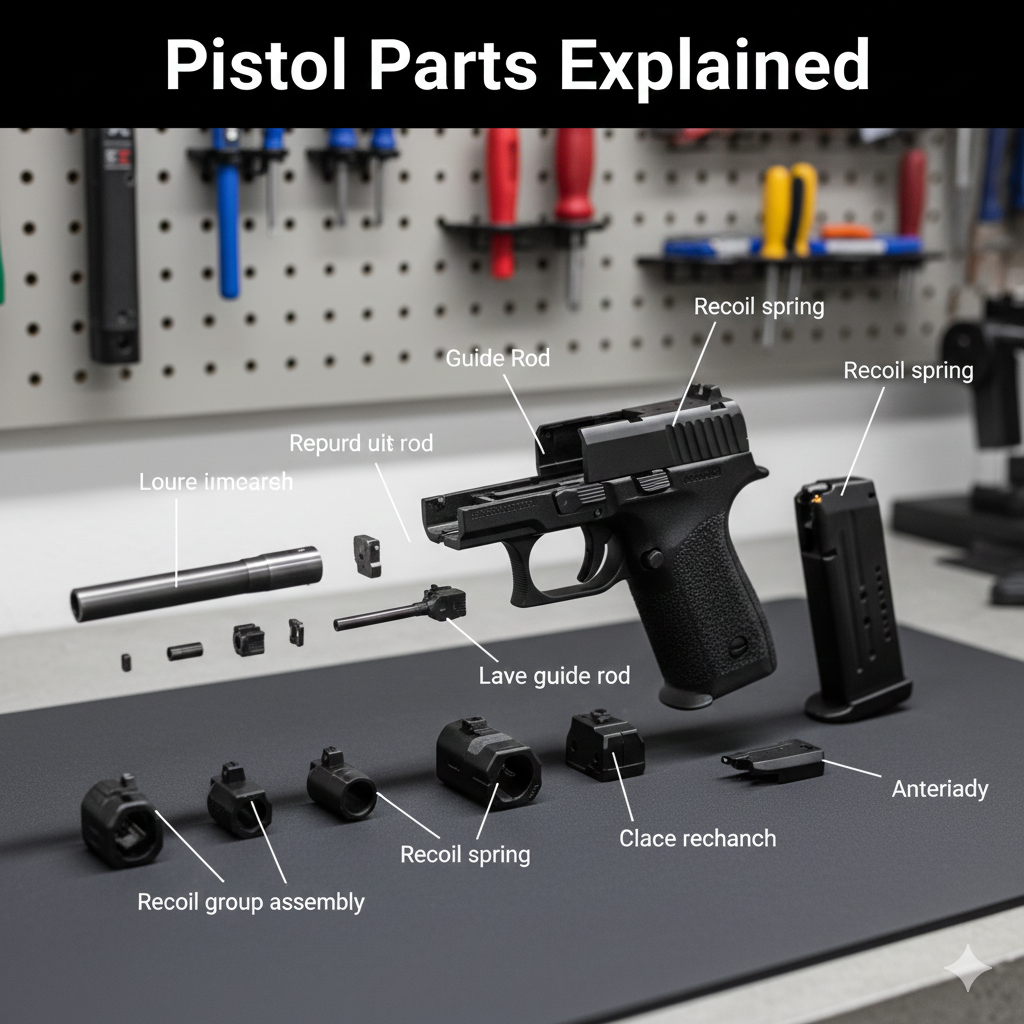
The recoil system controls the backward and forward movement of the slide. It consists mainly of the recoil spring and guide rod. When a shot is fired, the slide moves backward and compresses the recoil spring. That stored energy then pushes the slide forward again, chambering the next round.
The recoil spring must be properly matched to the pistol’s caliber and design. If it is too weak or too strong, the pistol may experience feeding or ejection problems. The guide rod keeps the spring aligned and helps ensure consistent movement.
The Magazine: Feeding Ammunition
The magazine is a detachable component that stores ammunition and feeds it into the pistol. Inside the magazine, cartridges are pushed upward by a spring. At the top of the spring is the follower, which keeps rounds properly aligned for feeding.
As the slide moves forward, it strips the top round from the magazine and guides it into the chamber. When the last round is fired, many pistols use the magazine follower to activate the slide stop, locking the slide open and signaling that the magazine is empty.
The Fire Control Group: Making the Pistol Fire
The fire control group includes all the components that make the pistol fire when the trigger is pulled. The trigger itself is the shooter’s input device. When pulled, it moves internal parts that release the firing mechanism.
Depending on the design, a pistol may use a hammer or a striker. In hammer-fired pistols, the trigger releases a hammer that strikes the firing pin. In striker-fired pistols, the trigger releases a spring-loaded striker that directly impacts the primer.
The sear plays a crucial role by holding the hammer or striker in place until the trigger is pulled. The trigger bar connects the trigger to the sear and other internal safety components. Together, these parts control when and how the pistol fires.
The Firing Pin or Striker: Igniting the Cartridge
The firing pin or striker is the part that physically strikes the primer of the cartridge. When the primer is hit, it ignites the powder inside the cartridge, creating expanding gases that push the bullet down the barrel.
Modern pistols include firing pin safeties that prevent the firing pin from moving unless the trigger is fully pulled. This ensures that the pistol will not discharge if dropped or jarred.
Safety Mechanisms in Pistols
Safety mechanisms are designed to prevent accidental or unintended discharges. Some pistols include manual safeties that must be disengaged before firing, while others rely on internal safeties that work automatically.
Trigger safeties prevent rearward movement of the trigger unless it is deliberately pressed. Firing pin blocks keep the firing pin from moving forward unless the trigger is engaged. Certain designs also include grip safeties that require the shooter to hold the pistol properly before it can fire.
Sights and Aiming Components
Sights are mounted on the slide and allow the shooter to aim accurately. The front sight is typically a blade or dot, while the rear sight provides a notch or aperture for alignment. Some pistols use night sights that glow in low-light environments, while others are designed to accept optical red-dot sights for faster target acquisition.
Extraction and Ejection
After a round is fired, the spent casing must be removed from the pistol. The extractor grips the rim of the casing and pulls it from the chamber as the slide moves backward. Once the casing contacts the ejector, it is pushed out through the ejection port.
This process must happen cleanly and consistently to avoid malfunctions such as stovepipes or failure to eject.
How All Pistol Parts Work Together
When the trigger is pulled, the firing mechanism releases the firing pin or striker, igniting the cartridge. The bullet travels down the barrel, recoil forces the slide backward, the spent casing is removed, and the recoil spring is compressed. The slide then moves forward again, loading a new round and resetting the trigger. This cycle happens extremely quickly, allowing semi-automatic pistols to fire efficiently and reliably.
Final Thoughts
A pistol is far more than a simple handheld tool. It is a complex mechanical system built around precise timing, controlled energy, and layered safety features. Understanding how pistol parts function helps shooters use firearms responsibly, maintain them properly, and diagnose problems when they occur.