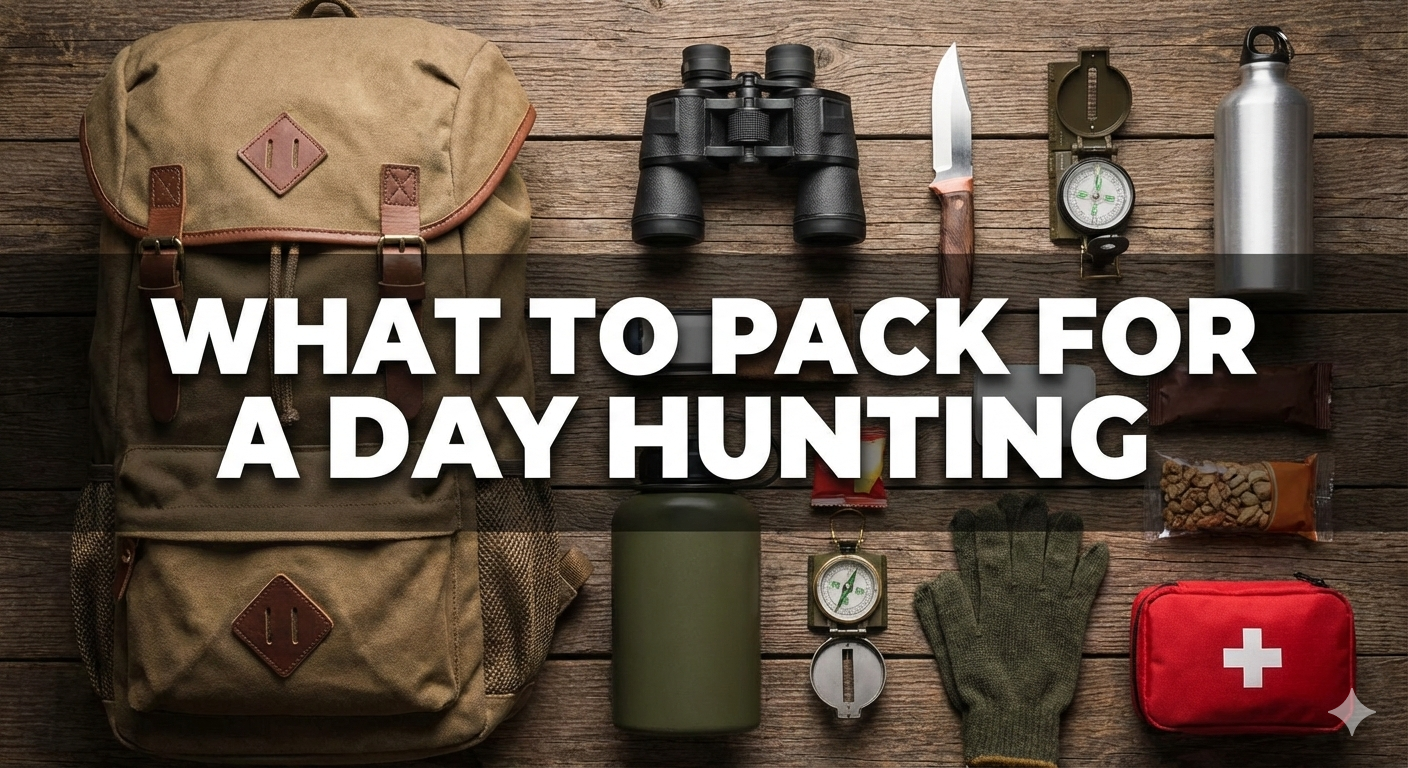
A successful day of hunting starts long before you step into the woods. Whether you’re heading out for deer, turkey, waterfowl, or small game, packing the right gear can mean the difference between an enjoyable, productive hunt and a frustrating or even dangerous experience. Because day hunts are time-limited, everything you carry must be purposeful, lightweight, and reliable.
This guide breaks down exactly what to pack for a day hunting trip, covering clothing, weapons, safety gear, navigation tools, food, and essential extras so you’re prepared for changing conditions without overpacking.
Table of Contents
Clothing is one of the most critical aspects of a hunting pack. Weather can change quickly, and improper clothing can lead to discomfort, fatigue, or hypothermia.
Start with a moisture-wicking base layer. Avoid cotton, as it traps moisture and takes a long time to dry. Synthetic or merino wool base layers keep sweat away from your skin and help regulate body temperature throughout the day.
Your mid-layer should provide insulation. Fleece jackets or lightweight down or synthetic insulated jackets work well, depending on temperature. For colder climates, pack an extra insulating layer even if the morning feels warm.
The outer layer should protect against wind, rain, and snow. A quiet, breathable, waterproof hunting jacket and pants are ideal, especially when stalking game. Make sure your clothing matches the environment—camouflage for big game or birds, blaze orange where legally required.
Don’t forget weather-specific accessories:
Comfortable, broken-in hunting boots are non-negotiable. Choose insulated boots for cold weather or breathable waterproof boots for early season hunts.
Your hunting weapon is the centerpiece of your gear, and it must be packed carefully and legally.
For firearm hunters, bring your rifle or shotgun, properly zeroed and clean. Pack enough ammunition for your hunt, but don’t overload yourself quality matters more than quantity. A small ammo pouch or holder keeps rounds accessible without noise.
If you’re bowhunting, bring your compound or recurve bow, release aid, arrows with sharp broadheads, and a bow sling for easier carry. A compact rangefinder is also extremely helpful for judging distances accurately.
Additional weapon accessories to consider:
Always transport and store weapons according to local hunting regulations.
Even experienced hunters can lose their bearings, especially in unfamiliar terrain or dense woods. Navigation tools are essential for safety.
A GPS device or hunting app on your phone can help track your location, mark game trails, and find your way back. However, electronics can fail, so always carry a physical map and compass as a backup.
Communication is equally important. A fully charged phone should be in your pack, ideally in a waterproof case. In areas with limited signal, a two-way radio or satellite communicator can be a lifesaver.
It’s also smart to tell someone where you’re hunting and when you plan to return.
A day hunt can easily last 6–10 hours, and staying fueled is crucial for focus and endurance.
Pack high-energy, lightweight food such as protein bars, trail mix, jerky, nuts, or sandwiches. Avoid foods with strong odors that could alert game or attract wildlife.
Water is critical, even in cold weather. Bring enough clean drinking water, typically at least one liter for a half-day hunt and more for longer trips. In warmer conditions or physically demanding hunts, increase your supply.
Some hunters also carry:
Dehydration and hunger can reduce reaction time and decision-making ability, so don’t underestimate this category.
Safety should never be an afterthought. A compact first aid kit is essential, even for short hunts. At minimum, include bandages, antiseptic wipes, blister treatment, pain relievers, and any personal medications.
Other important safety items include:
A small emergency kit can provide peace of mind without adding much weight.
If you’re successful, you’ll need the right tools to handle your harvest properly.
A sharp hunting knife is the most important item for field dressing. Many hunters also carry a backup knife or a small knife sharpener. Disposable gloves are helpful for cleanliness and warmth during colder hunts.
Additional useful items include:
Proper game care ensures the quality of your harvest and shows respect for the animal.
Certain accessories may not seem essential but can greatly improve your hunting experience.
Binoculars help you scout game from a distance without unnecessary movement. Calls or decoys may be required depending on the species you’re hunting. A small seat pad or lightweight stool can make long waits more comfortable.
Many hunters also pack:
These small items can increase your odds of success.
For a day hunt, your pack should be compact and well-organized. Use a quiet, comfortable hunting backpack with enough compartments to separate gear. Heavier items should sit close to your back to reduce fatigue.
Before every hunt, review your pack and remove anything unnecessary. Overpacking leads to discomfort and noise, while underpacking can leave you unprepared.
Knowing what to pack for a day hunting trip is about balancing preparation with mobility. The right gear keeps you safe, comfortable, and focused, allowing you to enjoy the hunt and adapt to changing conditions. By organizing your essentials clothing, weapons, navigation, food, safety, and field tools you set yourself up for a productive and memorable day in the field.
Every hunt is different, so adjust your pack based on season, location, and game type. With experience, you’ll refine your setup and carry only what truly matters.
Selecting the best scope magnification for shooting at 300 yards is a decision that directly…
Traveling with a firearm whether for hunting, competitive shooting, professional training, or lawful personal protection…
Preparing for a successful day at the shooting range involves much more than simply bringing…
Selecting the right tactical scope for hunting is one of the most important decisions a…
Hunting has always been deeply connected to nature, patience, and self-reliance. For generations, success in…
Choosing the right rifle scope is one of the most important decisions a shooter or…
This website uses cookies.
